
Abstract
How did the everyday Muslim subject in late colonial India engage with ethical and philosophical thought outside the confines of institutional reform? This article explores the proliferation of Urdu “Akhlaq” (ethics) literature in the late nineteenth and early twentieth centuries, challenging the dominant historiography of South Asian Islam that predominantly focuses on political movements and elite religious reform, such as Aligarh or Deoband. By examining commercially printed Urdu texts like “Makhzan-i Hikmat”, “Makhzan-i Akhlaq”, and “Aziz al-Afaq fi Masail al-Akhlaq”, the study demonstrates how these works seamlessly integrated classical Greek, Arabic, and Persian philosophy with contemporary Western thought, including figures like Newton and Franklin, into a cohesive Muslim ethical framework. The article focuses on the triad of intellect (Aql), soul (Ruh), and self (Nafs), arguing that this literature reveals a distinct, everyday Muslim subjectivity deeply invested in moral striving. Furthermore, the mass circulation of these texts through the vernacular print market destabilizes traditional notions of religious authority, shifting it away from exclusive elite domains. Ultimately, this research broadens the conceptualization of Islamic knowledge and intellectual history in colonial India. This Urdu translation of the scholarly article aims to make these critical historical debates accessible to a wider readership
Author(s):

Irfan Haider
PhD ScholarUniversity of Sargodha, Sargodha
Pakistan
- irfanhaider1004@gmail.com
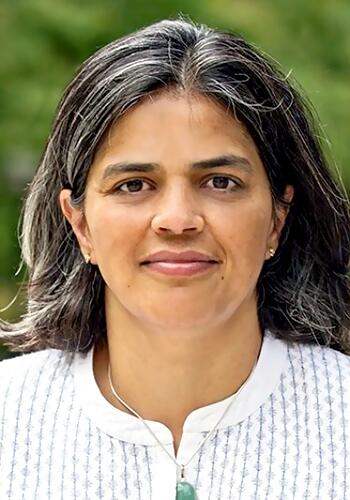
Farina Mir
Associate ProfessorDepartment of History, Michigan University, USA.
Pakistan
- fmir@umich.edu
Details:
| Type: | Article |
| Volume: | 17 |
| Issue: | 1 |
| Language: | Urdu |
| Id: | 6a356077e0465 |
| Published | June 19, 2026 |


This work is licensed under a Creative Commons Attribution-NonCommercial-NoDerivatives 4.0 International License.