
- بنیاد (مجّلہ دراساتِ اردو), Vol # 17, Issue # 1
- اردو کا اخلاقی ادب اور نوآبادیاتی ہندوستان میں مُسلم فکر کا تنوّع
اردو کا اخلاقی ادب اور نوآبادیاتی ہندوستان میں مُسلم فکر کا تنوّع
- Irfan Haider/
- Farina Mir/
- June 19, 2026
Urdu Ethics Literature and the Diversity of Muslim Thought in Colonial India
How did the everyday Muslim subject in late colonial India engage with ethical and philosophical thought outside the confines of institutional reform? This article explores the proliferation of Urdu “Akhlaq” (ethics) literature in the late nineteenth and early twentieth centuries, challenging the dominant historiography of South Asian Islam that predominantly focuses on political movements and elite religious reform, such as Aligarh or Deoband. By examining commercially printed Urdu texts like “Makhzan-i Hikmat”, “Makhzan-i Akhlaq”, and “Aziz al-Afaq fi Masail al-Akhlaq”, the study demonstrates how these works seamlessly integrated classical Greek, Arabic, and Persian philosophy with contemporary Western thought, including figures like Newton and Franklin, into a cohesive Muslim ethical framework. The article focuses on the triad of intellect (Aql), soul (Ruh), and self (Nafs), arguing that this literature reveals a distinct, everyday Muslim subjectivity deeply invested in moral striving. Furthermore, the mass circulation of these texts through the vernacular print market destabilizes traditional notions of religious authority, shifting it away from exclusive elite domains. Ultimately, this research broadens the conceptualization of Islamic knowledge and intellectual history in colonial India. This Urdu translation of the scholarly article aims to make these critical historical debates accessible to a wider readership
Adamson, Peter. “Al-Kindī”, Stanford Encyclopedia of Philosophy. Summer 2018.
Ahmed, Shahab. What is Islam? The Importance of Being Islamic. Princeton, NJ: Princeton University Press, 2016.
Alam, Muzaffar. “Akhlaqi Norms and Mughal Governance”, The Making of Indo-Persian Culture: Indian and French Studies, New Delhi: Manohar Publishers, 2000.
Alam, Muzaffar. “The Culture and Politics of Persian in Pre-Colonial Hindustan”, In Sheldon Pollock, ed., Literary Cultures in History: Reconstructions from South Asia, Berkeley, California: University of California Press, 2003, 131-98.
Alam, Muzaffar. The Languages of Political Islam: India, 1200-1800. Chicago: University of Chicago Press, 2004.
Alavi, Seema. Islam and Healing: Loss and Recovery of an Indo-Muslim Medical Tradition, 1600-1900. Ranikhet: Permanent Black, 2007.
Blackburn, Stuart. Print, Folklore, and Nationalism in Colonial South India. Ranikhet: Permanent Black, 2003.
Bosworth, Clifford Edmund. The Ghaznavids: Their Empire in Afghanistan and Eastern Iran, 994-1040. Edinburgh: Edinburgh University Press, 1963.
Bosworth, Clifford Edmund. The Later Ghaznavids: Splendor and Decay: The Dynasty in Afghanistan and Northern India, 1040-1186. New York: Columbia University Press, 1977.
Census of India, 1901: Vol. 1-A, India, Part II, Tables. Calcutta: Office of the Superintendent of Government Printing, 1903.
Dabashi, Hamid. “Khwājah Naṣīr al-Dīn al-Ṭūsī: The Philosopher/Vizier and the Intellectual Climate of His Times”, History of Islamic Philosophy, Part 1, 527-84. New York: Routledge, 1996.
Daechsel, Markus. The Politics of Self-Expression: The Urdu Middle-Class Milieu in Mid-Twentieth Century India and Pakistan. New York: Routledge, 2006.
Darnton, Robert. “Book Production in British India, 1850-1900”, Book History 5, 239-62. 2002.
Darnton, Robert. “Literary Surveillance in the British Raj: The Contradictions of Liberal Imperialism”, Book History 4, 133-76. 2001.
Datla, Kavita Saraswathi. The Language of Secular Islam: Urdu Nationalism and Colonial India. Honolulu: University of Hawai'i Press, 2013.
Dhulipala, Venkat. Creating a New Medina: State Power, Islam, and the Quest for Pakistan in Late Colonial North India. New York: Cambridge University Press, 2015.
Dubrow, Jennifer. Cosmopolitan Dreams: The Making of Modern Urdu Literary Culture in Colonial South Asia. Honolulu: University of Hawai'i Press, 2018.
Ernst, Carl W. and Bruce B. Lawrence. Sufi Martyrs of Love: The Chishti Order in South Asia and Beyond. New York: Palgrave Macmillan, 2002.
Flatt, Emma J. The Courts of the Deccan Sultanates: Living Well in the Persian Cosmopolis. Cambridge: Cambridge University Press, 2019.
Friedmann, Yohanan. Prophecy Continuous: Aspects of Ahmadi Religious Thought and Its Medieval Background. Berkeley, CA: University of California Press, 1989.
Ghosh, Anindita. Power in Print: Popular Publishing and the Politics of Language and Culture in a Colonial Society, 1778-1905. Delhi: Oxford University Press, 2006.
Gilmartin, David. “Partition, Pakistan, and South Asian History: In Search of a Narrative”, Journal of Asian Studies 57, no. 4, 1068-95. 1998.
Gilmartin, David. “The Historiography of India's Partition: Between Civilization and Modernity”, Journal of Asian Studies 74, no. 1, 2015, 23-41.
Green, Nile. “Journeymen, Middlemen: Travel, Transculture, and Technology in the Origins of Muslim Printing”, International Journal of Middle East Studies 41, no. 2, 2009, 203-24.
Green, Nile. Bombay Islam: The Religious Economy of the West Indian Ocean, 1840-1915. New York: Cambridge University Press, 2011.
Gupta, Abhijit and Swapan Chakravorty, eds. Founts of Knowledge: Book History in India. New Delhi: Orient Blackswan, 2016.
Gupta, Abhijit and Swapan Chakravorty, eds. Moveable Type: Book History in India. Ranikhet: Permanent Black, 2008.
Hakala, Walter N. Negotiating Languages: Urdu, Hindi, and the Definition of Modern South Asia. New York: Columbia University Press, 2016.
Hermansen, Marcia. “Imagining Space and Siting Collective Memory in South Asian Muslim Biographical Literature (Tazkirahs)”, Studies in Contemporary Islam 4, no. 2, 2002, 1-22.
Hutton, J. H. Census of India, Vol. 1 - India, Part I - Report. Delhi: Manager of Publications, 1933.
Ivry, Alfred. “Arabic and Islamic Psychology and Philosophy of Mind”, In Edward N. Zalta, ed., Stanford Encyclopedia of Philosophy. Summer 2012.
Jalal, Ayesha. Partisans of Allah: Jihad in South Asia. Cambridge, MA: Harvard University Press, 2008.
Jalal, Ayesha. Self and Sovereignty: Individual and Community in South Asian Islam Since 1850. London: Routledge, 2000.
Jalal, Ayesha. The Sole Spokesman: Jinnah, the Muslim League and the Demand for Pakistan. Cambridge: Cambridge University Press, 1994.
Jones, Justin. Shi’a Islam in Colonial India: Religion, Community and Sectarianism. Cambridge: Cambridge University Press, 2012.
Kalin, Ibrahim. “Akhlaq”, In John L. Esposito, ed., The Oxford Encyclopedia of the Islamic World. Oxford: Oxford University Press, 2009.
Kashifi, Husayn Vaiz. Akhlāq-i Muḥsinī. Hertford: Stephen Austin, 1850.
Khan, I. A. “Tracing Sources of Principles of Mughal Governance: A Critique of Recent Historiography”, Social Scientist 37, no. 5/6, 45-54. 2009.
Khan, Maryam Wasif. “Nation/Quam: The 'Musalmans' of India”, In Who Is a Muslim? Orientalism and Literary Populisms. New York: Fordham University Press, 2021.
Khan, Naveeda. Muslim Becoming: Aspiration and Skepticism in Pakistan. Durham, NC: Duke University Press, 2012.
Khoja-Moolji, Shenila. Forging the Ideal Educated Girl: The Production of Desirable Subjects in Muslim South Asia. Oakland, CA: University of California Press, 2018.
Kia, Mana. “Adab as Ethics of Literary Form and Social Conduct: Reading the Gulistan in Late Mughal India”, No Tapping around Philology: A Festschrift in Honor of Wheeler McIntosh Thackston Jr.'s 70th Birthday, 281-308. Wiesbaden: Harrassowitz Verlag, 2014.
King, Christopher R. One Language, Two Scripts: The Hindi Movement in Nineteenth Century North India. Delhi: Oxford University Press, 1994.
Kurin, Richard. “Morality, Personhood, and the Exemplary Life: Popular Conceptions of Muslims in Paradise”, Moral Conduct and Authority: The Place of Adab in South Asian Islam, 196-220. Berkeley, California: University of California Press, 1984.
Lambton, Ann K. S. “Al-Dawwānī”, Encyclopedia of Islam.
Lelyveld, David. “Colonial Knowledge and the Fate of Hindustani”, Comparative Studies in Society and History 35, no. 4, 665-82. 1993.
Lelyveld, David. “Sir Sayyid's Public Sphere: Urdu Print and Oratory in Nineteenth Century India”, Cracow Indological Studies 11, 2009, , 237-67.
Lelyveld, David. Aligarh's First Generation: Muslim Solidarity in British India. Princeton, NJ: Princeton University Press, 1977.
Masud, Muhammad Khalid. “Islamic Modernism”, Islam and Modernity: Key Issues and Debates, 237-60. Edinburgh: Edinburgh University Press, 2009.
McGinnis, Jon. Avicenna. New York: Oxford University Press, 2010.
Metcalf, Barbara Daly. Islamic Revival in British India: Deoband, 1860-1900. Princeton, NJ: Princeton University Press, 1982.
Metcalf, Barbara Daly, ed. Moral Conduct and Authority: The Place of Adab in South Asian Islam. Berkeley, California: University of California Press, 1984.
Minault, Gail. “Delhi College and Urdu”, Annual of Urdu Studies 14, 1999, 119-34.
Mir, Farina. “Imperial Policy, Provincial Practices: Colonial Language Policy in Nineteenth Century India”, Indian Economic and Social History Review 43, no. 4, 2006, 395-427.
Miskawayh, Ahmad ibn. The Refinement of Character: A Translation from the Arabic of Ahmad ibn Miskawayh's Tahdhib al-Akhlaq. Translated by Constantine K. Zurayk. Beirut: American University of Beirut, 1968.
Naim, C. M. “Prize-Winning Adab: A Study of Five Urdu Books Written in Response to the Allahabad Government Gazette Notification”, Moral Conduct and Authority: The Place of Adab in South Asian Islam, 290-314. Berkeley, California: University of California Press, 1984.
Orsini, Francesca. Print and Pleasure: Popular Literature and Entertaining Fictions in Colonial North India. Ranikhet: Permanent Black, 2009.
Orsini, Francesca, ed. The History of the Book in South Asia. New York: Routledge, 2013.
Pearson, Harlan O. Islamic Reform and Revival in Nineteenth Century India: The Tariqah-i Muhammadiyah. New Delhi: Yoda Press, 2008.
Pellat, Charles. “Adab II. Adab in Arabic Literature”, Encyclopedia Iranica, 1/4, 439-44.
Perkins, C. Ryan. “From the Mehfil to the Printed Word: Public Debate and Discourse in Late Colonial India”, Indian Economic and Social History Review 50, no. 1, 2013, 47-76.
Pernau, Margrit. “Teaching Emotions: The Encounter between Victorian Values and Indo-Persian Concepts of Civility in Nineteenth Century Delhi”, Knowledge Production, Pedagogy, and Institutions in Colonial India, New York: Palgrave Macmillan, 2011, 227-47.
Pernau, Margrit. “The Virtuous Individual and Social Reform: Debates among North Indian Urdu Speakers”, In Civilizing Emotions: Concepts in Nineteenth Century Asia and Europe, Oxford: Oxford University Press, 2015, 169-86.
Pernau, Margrit, ed. The Delhi College: Traditional Elites, the Colonial State, and Education before 1857. Delhi: Oxford University Press, 2006.
Platts, John T. A Dictionary of Classical Urdu, Classical Hindi, and English. London: W. H. Allen & Co., 1884.
Powell, Avril A. “Old Books in New Bindings: Ethics and Education in Colonial India”, Knowledge Production, Pedagogy, and Institutions in Colonial India, New York: Palgrave Macmillan, 2011, 199-226.
Purohit, Teena. The Aga Khan Case: Religion and Identity in Colonial India. Cambridge, MA: Harvard University Press, 2012.
Qasmi, Ali Usman. Questioning the Authority of the Past: The Ahl al-Qurʾān Movements in the Punjab. Karachi: Oxford University Press, 2011.
Rahman, Fazlur. “Akhlaq”, Encyclopedia Iranica, 1/7, 719-23.
Robb, Megan Eaton. Print and the Urdu Public: Muslims, Newspapers, and Urban Life in Colonial India. New York: Oxford University Press, 2020.
Robinson, Francis. “Religious Change and the Self in Muslim South Asia since 1800”, South Asia: Journal of South Asian Studies 20, no. 1, 1997, 1-15.
Robinson, Francis. “Technology and Religious Change: Islam and the Impact of Print”, Modern Asian Studies 27, no. 1, 1993, 229-51.
Robinson, Francis. The ʿUlamā of Farangi Mahall and Islamic Culture in South Asia. London: C. Hurst & Co., 2001.
Samdani, Aziz. ʿAzīz al-Āfāq fī Masāʾil al-Akhlāqq. Allahabad: 1894.
Sanyal, Usha. Devotional Islam and Politics in British India: Ahmad Riza Khan Barelwi and His Movement, 1870-1920. New York: Oxford University Press, 1996.
Sarwar, Mufti Ghulam. Makhzan-i Ḥikmat. Lucknow: Naval Kishore Press, 1878.
Schimmel, Annemarie. Islam in the Indian Subcontinent. Leiden: E. J. Brill, 1980.
Sengupta, Indira and Daud Ali, eds. Knowledge Production, Pedagogy, and Institutions in Colonial India. New York: Palgrave Macmillan, 2011.
Sengupta, Parna. Pedagogy for Religion: Missionary Education and the Fashioning of Hindus and Muslims in Bengal. Berkeley, CA: University of California Press, 2011.
Shah, Zahra. “Sustaining Authority in Persian Lithographed Books: Publishers and Printers in North India, c. 1835-57”, South Asian Studies 33, no. 2, 2017, 137-48.
Sharma, Sunil. Persian Poetry at the Indian Frontier: Mas’ud Sa’d Salman of Lahore. Delhi: Permanent Black, 2000.
Shaw, Graham. “Calcutta: Birthplace of the Indian Lithographed Book”, Journal of the Printing Historical Society 27, 1998, 89-111.
Shaw, Graham. “South Asia”, In A Companion to the History of the Book, Oxford: Blackwell Publishing, 2007, 126-37.
Stark, Ulrike. An Empire of Books: The Naval Kishore Press and the Diffusion of the Printed Word in Colonial India. Ranikhet: Permanent Black, 2007.
Subhani, Rahmatullah. Makhzan-i Akhlāq. Lahore: 1939.
Subtelny, Maria E. “Ḥusain Vāʿiẓ-i Kāshifī: Polymath, Popularizer, and Preserver”, Iranian Studies 36, no. 4, 2003, 463-67.
Sunaga, Emiko. “A Study of the Urdu Print Culture of South Asia since the Late Eighteenth Century”, Kyoto Bulletin of Islamic Area Studies 6, 136-44. 2013.
Tavakoli-Targhi, Mohamad. “Early Persianate Modernity”, Forms of Knowledge in Early Modern Asia: Explorations in the Intellectual History of India and Tibet, 1500-1800, Durham, North Carolina: Duke University Press, 2011, 257-87.
Venkatachalapathy, A. R. The Province of the Book: Scholars, Scribes, and Scribblers in Colonial Tamilnadu. Ranikhet: Permanent Black, 2012.
Walzer, R. and H. A. R. Gibb. “Ākhlāq”, Encyclopedia of Islam.
Walzer, Richard. “Al-Fārābī”, Encyclopedia of Islam, 2nd ed.
––––––, ed. Greek into Arabic: Essays on Islamic Philosophy. Cambridge, Massachusetts: Harvard University Press, 1962.
Werbner, Pnina. “Reform Sufism in South Asia”, Islamic Reform in South Asia, 51-78. Cambridge: Cambridge University Press, 2013.
Zaman, Muhammad Qasim. The U’lāmā in Contemporary Islam: Custodians of Change. Princeton, NJ: Princeton University Press, 2002.
Zastoupil, Lynn and Martin Moir, The Great Indian Education Debate: Documents Relating to the Orientalist-Anglicist Controversy, 1781-1843. New York: Routledge, 1999
How to cite
Haider, I., & Mir, F. (2026). اردو کا اخلاقی ادب اور نوآبادیاتی ہندوستان میں مُسلم فکر کا تنوّع. بنیاد (مجّلہ دراساتِ اردو), 17(1). https://bunyad.lums.edu.pk/website/journal/article/6a356077e0465/page
Retrieved from https://bunyad.lums.edu.pk/website/journal/article/6a356077e0465/page
More citation formats
- ACM SIG Proceedings
-
[1]Haider, I. and Mir, F. 2026. اردو کا اخلاقی ادب اور نوآبادیاتی ہندوستان میں مُسلم فکر کا تنوّع. بنیاد (مجّلہ دراساتِ اردو). 17, 1 (June 2026).
- ACS Nano
-
(1)Haider, I.; Mir, F. اردو کا اخلاقی ادب اور نوآبادیاتی ہندوستان میں مُسلم فکر کا تنوّع. بنیاد (مجّلہ دراساتِ اردو) 2026, 17 (1).
- ABNT
-
HAIDER, Irfan; MIR, Farina. اردو کا اخلاقی ادب اور نوآبادیاتی ہندوستان میں مُسلم فکر کا تنوّع. بنیاد (مجّلہ دراساتِ اردو), v. 17, n. 1, 19 June2026.
- Chicago (author-date)
- Harvard (Cite Them Right)
-
Haider, I. and Mir, F. (2026) “اردو کا اخلاقی ادب اور نوآبادیاتی ہندوستان میں مُسلم فکر کا تنوّع”, بنیاد (مجّلہ دراساتِ اردو), 17(1). Available at: https://bunyad.lums.edu.pk/website/journal/article/6a356077e0465/page (Accessed: 22 October 2026).
- IEEE
-
[1]I. Haider and F. Mir, “اردو کا اخلاقی ادب اور نوآبادیاتی ہندوستان میں مُسلم فکر کا تنوّع”, بنیاد (مجّلہ دراساتِ اردو), vol. 17, no. 1, June 2026, Accessed: Oct. 22, 2026. [Online]. Available: https://bunyad.lums.edu.pk/website/journal/article/6a356077e0465/page
- MLA
-
Haider, Irfan, and Farina Mir. “اردو کا اخلاقی ادب اور نوآبادیاتی ہندوستان میں مُسلم فکر کا تنوّع”. بنیاد (مجّلہ دراساتِ اردو), vols. 17, no. 1, June 2026, https://bunyad.lums.edu.pk/website/journal/article/6a356077e0465/page.
- Turabian (full note bibliography)
-
Haider, Irfan, and Farina Mir. “اردو کا اخلاقی ادب اور نوآبادیاتی ہندوستان میں مُسلم فکر کا تنوّع”. بنیاد (مجّلہ دراساتِ اردو) 17, no. 1 (June 19, 2026). Accessed October 22, 2026. https://bunyad.lums.edu.pk/website/journal/article/6a356077e0465/page.
- Vancouver
-
1.Haider I, Mir F. اردو کا اخلاقی ادب اور نوآبادیاتی ہندوستان میں مُسلم فکر کا تنوّع. بنیاد (مجّلہ دراساتِ اردو) [Internet]. 2026 June 19 [cited 2026 Oct. 22];17(1). Available from: https://bunyad.lums.edu.pk/website/journal/article/6a356077e0465/page
- AMA
-
1.Haider I, Mir F. اردو کا اخلاقی ادب اور نوآبادیاتی ہندوستان میں مُسلم فکر کا تنوّع. بنیاد (مجّلہ دراساتِ اردو). 2026;17(1). Accessed October 22, 2026. https://bunyad.lums.edu.pk/website/journal/article/6a356077e0465/page
Download citation Endnote/Zotero/Mendeley (RIS) BibTeX
-
اداریہ: غرب شناسی
Nasir Abbas Nayyar
-
ادونیس: روایت سے جدیدیت تک
Khurshid Rizvi
-
فصیح اللغات کا تحقیقی و تنقیدی جائزہ (اصولِ لغت نویسی کے تناظر میں)
Rauf Parekh
-
اُردو میں متضاد الفاظ کا لسانیاتی، معنوی اور لغوی تجزیہ
Wasiullah Khokhar
-
۱۸۵۷ء کی تاریخ نویسی اور غالب کا روزنامچہ دستنبو: نوآبادیاتی نقالی اور بقا کی سیاست کا مطالعہ
Shafey Kidwai
-
’’ اسباب سرکشی ہندوستان ۱۸۵۷ء ‘‘کے جواب میں ایک محضر (از صوبیدار شیخ ہدایت علی)
Sajid Siddique Nizami
-
اردو افسانے میں اینگلو انڈین کرداروں کی پیش کش
Muhammad Nasrullah
-
شعرِ غالب میں گھر کا تصور
Shaista Hassan
-
اُردو غزل میں دَشت بطور مکاں اور مکانی استعارہ: جغرافی تنقید کے تناظر میں
Muhammad Amir Sohail
-
ناصر کاظمی کی ’’پہلی بارش‘‘: متروک اشعار، ترامیم واضافہ
Mushtaq Ahmed Khan
-
اُردو شاعری میں حیوانات کے استعارے: ماحولیاتی تناظر
Tariq Hashmi
-
جدید اُردو غزل میں درختوں کے نوحے
Imtiaz Anjum
Author(s):

Irfan Haider
PhD ScholarUniversity of Sargodha, Sargodha
Pakistan
- irfanhaider1004@gmail.com
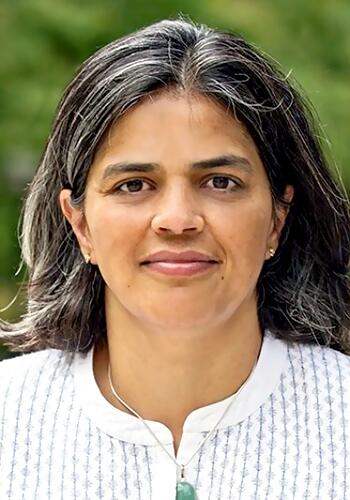
Farina Mir
Associate ProfessorDepartment of History, Michigan University, USA.
Pakistan
- fmir@umich.edu
Details:
| Type: | Article |
| Volume: | 17 |
| Issue: | 1 |
| Language: | Urdu |
| Id: | 6a356077e0465 |
| Published | June 19, 2026 |
Statistics
|
|---|


This work is licensed under a Creative Commons Attribution-NonCommercial-NoDerivatives 4.0 International License.