
References
Adamson, Peter. “Al-Kindī”, Stanford Encyclopedia of Philosophy. Summer 2018.
Ahmed, Shahab. What is Islam? The Importance of Being Islamic. Princeton, NJ: Princeton University Press, 2016.
Alam, Muzaffar. “Akhlaqi Norms and Mughal Governance”, The Making of Indo-Persian Culture: Indian and French Studies, New Delhi: Manohar Publishers, 2000.
Alam, Muzaffar. “The Culture and Politics of Persian in Pre-Colonial Hindustan”, In Sheldon Pollock, ed., Literary Cultures in History: Reconstructions from South Asia, Berkeley, California: University of California Press, 2003, 131-98.
Alam, Muzaffar. The Languages of Political Islam: India, 1200-1800. Chicago: University of Chicago Press, 2004.
Alavi, Seema. Islam and Healing: Loss and Recovery of an Indo-Muslim Medical Tradition, 1600-1900. Ranikhet: Permanent Black, 2007.
Blackburn, Stuart. Print, Folklore, and Nationalism in Colonial South India. Ranikhet: Permanent Black, 2003.
Bosworth, Clifford Edmund. The Ghaznavids: Their Empire in Afghanistan and Eastern Iran, 994-1040. Edinburgh: Edinburgh University Press, 1963.
Bosworth, Clifford Edmund. The Later Ghaznavids: Splendor and Decay: The Dynasty in Afghanistan and Northern India, 1040-1186. New York: Columbia University Press, 1977.
Census of India, 1901: Vol. 1-A, India, Part II, Tables. Calcutta: Office of the Superintendent of Government Printing, 1903.
Dabashi, Hamid. “Khwājah Naṣīr al-Dīn al-Ṭūsī: The Philosopher/Vizier and the Intellectual Climate of His Times”, History of Islamic Philosophy, Part 1, 527-84. New York: Routledge, 1996.
Daechsel, Markus. The Politics of Self-Expression: The Urdu Middle-Class Milieu in Mid-Twentieth Century India and Pakistan. New York: Routledge, 2006.
Darnton, Robert. “Book Production in British India, 1850-1900”, Book History 5, 239-62. 2002.
Darnton, Robert. “Literary Surveillance in the British Raj: The Contradictions of Liberal Imperialism”, Book History 4, 133-76. 2001.
Datla, Kavita Saraswathi. The Language of Secular Islam: Urdu Nationalism and Colonial India. Honolulu: University of Hawai'i Press, 2013.
Dhulipala, Venkat. Creating a New Medina: State Power, Islam, and the Quest for Pakistan in Late Colonial North India. New York: Cambridge University Press, 2015.
Dubrow, Jennifer. Cosmopolitan Dreams: The Making of Modern Urdu Literary Culture in Colonial South Asia. Honolulu: University of Hawai'i Press, 2018.
Ernst, Carl W. and Bruce B. Lawrence. Sufi Martyrs of Love: The Chishti Order in South Asia and Beyond. New York: Palgrave Macmillan, 2002.
Flatt, Emma J. The Courts of the Deccan Sultanates: Living Well in the Persian Cosmopolis. Cambridge: Cambridge University Press, 2019.
Friedmann, Yohanan. Prophecy Continuous: Aspects of Ahmadi Religious Thought and Its Medieval Background. Berkeley, CA: University of California Press, 1989.
Ghosh, Anindita. Power in Print: Popular Publishing and the Politics of Language and Culture in a Colonial Society, 1778-1905. Delhi: Oxford University Press, 2006.
Gilmartin, David. “Partition, Pakistan, and South Asian History: In Search of a Narrative”, Journal of Asian Studies 57, no. 4, 1068-95. 1998.
Gilmartin, David. “The Historiography of India's Partition: Between Civilization and Modernity”, Journal of Asian Studies 74, no. 1, 2015, 23-41.
Green, Nile. “Journeymen, Middlemen: Travel, Transculture, and Technology in the Origins of Muslim Printing”, International Journal of Middle East Studies 41, no. 2, 2009, 203-24.
Green, Nile. Bombay Islam: The Religious Economy of the West Indian Ocean, 1840-1915. New York: Cambridge University Press, 2011.
Gupta, Abhijit and Swapan Chakravorty, eds. Founts of Knowledge: Book History in India. New Delhi: Orient Blackswan, 2016.
Gupta, Abhijit and Swapan Chakravorty, eds. Moveable Type: Book History in India. Ranikhet: Permanent Black, 2008.
Hakala, Walter N. Negotiating Languages: Urdu, Hindi, and the Definition of Modern South Asia. New York: Columbia University Press, 2016.
Hermansen, Marcia. “Imagining Space and Siting Collective Memory in South Asian Muslim Biographical Literature (Tazkirahs)”, Studies in Contemporary Islam 4, no. 2, 2002, 1-22.
Hutton, J. H. Census of India, Vol. 1 - India, Part I - Report. Delhi: Manager of Publications, 1933.
Ivry, Alfred. “Arabic and Islamic Psychology and Philosophy of Mind”, In Edward N. Zalta, ed., Stanford Encyclopedia of Philosophy. Summer 2012.
Jalal, Ayesha. Partisans of Allah: Jihad in South Asia. Cambridge, MA: Harvard University Press, 2008.
Jalal, Ayesha. Self and Sovereignty: Individual and Community in South Asian Islam Since 1850. London: Routledge, 2000.
Jalal, Ayesha. The Sole Spokesman: Jinnah, the Muslim League and the Demand for Pakistan. Cambridge: Cambridge University Press, 1994.
Jones, Justin. Shi’a Islam in Colonial India: Religion, Community and Sectarianism. Cambridge: Cambridge University Press, 2012.
Kalin, Ibrahim. “Akhlaq”, In John L. Esposito, ed., The Oxford Encyclopedia of the Islamic World. Oxford: Oxford University Press, 2009.
Kashifi, Husayn Vaiz. Akhlāq-i Muḥsinī. Hertford: Stephen Austin, 1850.
Khan, I. A. “Tracing Sources of Principles of Mughal Governance: A Critique of Recent Historiography”, Social Scientist 37, no. 5/6, 45-54. 2009.
Khan, Maryam Wasif. “Nation/Quam: The 'Musalmans' of India”, In Who Is a Muslim? Orientalism and Literary Populisms. New York: Fordham University Press, 2021.
Khan, Naveeda. Muslim Becoming: Aspiration and Skepticism in Pakistan. Durham, NC: Duke University Press, 2012.
Khoja-Moolji, Shenila. Forging the Ideal Educated Girl: The Production of Desirable Subjects in Muslim South Asia. Oakland, CA: University of California Press, 2018.
Kia, Mana. “Adab as Ethics of Literary Form and Social Conduct: Reading the Gulistan in Late Mughal India”, No Tapping around Philology: A Festschrift in Honor of Wheeler McIntosh Thackston Jr.'s 70th Birthday, 281-308. Wiesbaden: Harrassowitz Verlag, 2014.
King, Christopher R. One Language, Two Scripts: The Hindi Movement in Nineteenth Century North India. Delhi: Oxford University Press, 1994.
Kurin, Richard. “Morality, Personhood, and the Exemplary Life: Popular Conceptions of Muslims in Paradise”, Moral Conduct and Authority: The Place of Adab in South Asian Islam, 196-220. Berkeley, California: University of California Press, 1984.
Lambton, Ann K. S. “Al-Dawwānī”, Encyclopedia of Islam.
Lelyveld, David. “Colonial Knowledge and the Fate of Hindustani”, Comparative Studies in Society and History 35, no. 4, 665-82. 1993.
Lelyveld, David. “Sir Sayyid's Public Sphere: Urdu Print and Oratory in Nineteenth Century India”, Cracow Indological Studies 11, 2009, , 237-67.
Lelyveld, David. Aligarh's First Generation: Muslim Solidarity in British India. Princeton, NJ: Princeton University Press, 1977.
Masud, Muhammad Khalid. “Islamic Modernism”, Islam and Modernity: Key Issues and Debates, 237-60. Edinburgh: Edinburgh University Press, 2009.
McGinnis, Jon. Avicenna. New York: Oxford University Press, 2010.
Metcalf, Barbara Daly. Islamic Revival in British India: Deoband, 1860-1900. Princeton, NJ: Princeton University Press, 1982.
Metcalf, Barbara Daly, ed. Moral Conduct and Authority: The Place of Adab in South Asian Islam. Berkeley, California: University of California Press, 1984.
Minault, Gail. “Delhi College and Urdu”, Annual of Urdu Studies 14, 1999, 119-34.
Mir, Farina. “Imperial Policy, Provincial Practices: Colonial Language Policy in Nineteenth Century India”, Indian Economic and Social History Review 43, no. 4, 2006, 395-427.
Miskawayh, Ahmad ibn. The Refinement of Character: A Translation from the Arabic of Ahmad ibn Miskawayh's Tahdhib al-Akhlaq. Translated by Constantine K. Zurayk. Beirut: American University of Beirut, 1968.
Naim, C. M. “Prize-Winning Adab: A Study of Five Urdu Books Written in Response to the Allahabad Government Gazette Notification”, Moral Conduct and Authority: The Place of Adab in South Asian Islam, 290-314. Berkeley, California: University of California Press, 1984.
Orsini, Francesca. Print and Pleasure: Popular Literature and Entertaining Fictions in Colonial North India. Ranikhet: Permanent Black, 2009.
Orsini, Francesca, ed. The History of the Book in South Asia. New York: Routledge, 2013.
Pearson, Harlan O. Islamic Reform and Revival in Nineteenth Century India: The Tariqah-i Muhammadiyah. New Delhi: Yoda Press, 2008.
Pellat, Charles. “Adab II. Adab in Arabic Literature”, Encyclopedia Iranica, 1/4, 439-44.
Perkins, C. Ryan. “From the Mehfil to the Printed Word: Public Debate and Discourse in Late Colonial India”, Indian Economic and Social History Review 50, no. 1, 2013, 47-76.
Pernau, Margrit. “Teaching Emotions: The Encounter between Victorian Values and Indo-Persian Concepts of Civility in Nineteenth Century Delhi”, Knowledge Production, Pedagogy, and Institutions in Colonial India, New York: Palgrave Macmillan, 2011, 227-47.
Pernau, Margrit. “The Virtuous Individual and Social Reform: Debates among North Indian Urdu Speakers”, In Civilizing Emotions: Concepts in Nineteenth Century Asia and Europe, Oxford: Oxford University Press, 2015, 169-86.
Pernau, Margrit, ed. The Delhi College: Traditional Elites, the Colonial State, and Education before 1857. Delhi: Oxford University Press, 2006.
Platts, John T. A Dictionary of Classical Urdu, Classical Hindi, and English. London: W. H. Allen & Co., 1884.
Powell, Avril A. “Old Books in New Bindings: Ethics and Education in Colonial India”, Knowledge Production, Pedagogy, and Institutions in Colonial India, New York: Palgrave Macmillan, 2011, 199-226.
Purohit, Teena. The Aga Khan Case: Religion and Identity in Colonial India. Cambridge, MA: Harvard University Press, 2012.
Qasmi, Ali Usman. Questioning the Authority of the Past: The Ahl al-Qurʾān Movements in the Punjab. Karachi: Oxford University Press, 2011.
Rahman, Fazlur. “Akhlaq”, Encyclopedia Iranica, 1/7, 719-23.
Robb, Megan Eaton. Print and the Urdu Public: Muslims, Newspapers, and Urban Life in Colonial India. New York: Oxford University Press, 2020.
Robinson, Francis. “Religious Change and the Self in Muslim South Asia since 1800”, South Asia: Journal of South Asian Studies 20, no. 1, 1997, 1-15.
Robinson, Francis. “Technology and Religious Change: Islam and the Impact of Print”, Modern Asian Studies 27, no. 1, 1993, 229-51.
Robinson, Francis. The ʿUlamā of Farangi Mahall and Islamic Culture in South Asia. London: C. Hurst & Co., 2001.
Samdani, Aziz. ʿAzīz al-Āfāq fī Masāʾil al-Akhlāqq. Allahabad: 1894.
Sanyal, Usha. Devotional Islam and Politics in British India: Ahmad Riza Khan Barelwi and His Movement, 1870-1920. New York: Oxford University Press, 1996.
Sarwar, Mufti Ghulam. Makhzan-i Ḥikmat. Lucknow: Naval Kishore Press, 1878.
Schimmel, Annemarie. Islam in the Indian Subcontinent. Leiden: E. J. Brill, 1980.
Sengupta, Indira and Daud Ali, eds. Knowledge Production, Pedagogy, and Institutions in Colonial India. New York: Palgrave Macmillan, 2011.
Sengupta, Parna. Pedagogy for Religion: Missionary Education and the Fashioning of Hindus and Muslims in Bengal. Berkeley, CA: University of California Press, 2011.
Shah, Zahra. “Sustaining Authority in Persian Lithographed Books: Publishers and Printers in North India, c. 1835-57”, South Asian Studies 33, no. 2, 2017, 137-48.
Sharma, Sunil. Persian Poetry at the Indian Frontier: Mas’ud Sa’d Salman of Lahore. Delhi: Permanent Black, 2000.
Shaw, Graham. “Calcutta: Birthplace of the Indian Lithographed Book”, Journal of the Printing Historical Society 27, 1998, 89-111.
Shaw, Graham. “South Asia”, In A Companion to the History of the Book, Oxford: Blackwell Publishing, 2007, 126-37.
Stark, Ulrike. An Empire of Books: The Naval Kishore Press and the Diffusion of the Printed Word in Colonial India. Ranikhet: Permanent Black, 2007.
Subhani, Rahmatullah. Makhzan-i Akhlāq. Lahore: 1939.
Subtelny, Maria E. “Ḥusain Vāʿiẓ-i Kāshifī: Polymath, Popularizer, and Preserver”, Iranian Studies 36, no. 4, 2003, 463-67.
Sunaga, Emiko. “A Study of the Urdu Print Culture of South Asia since the Late Eighteenth Century”, Kyoto Bulletin of Islamic Area Studies 6, 136-44. 2013.
Tavakoli-Targhi, Mohamad. “Early Persianate Modernity”, Forms of Knowledge in Early Modern Asia: Explorations in the Intellectual History of India and Tibet, 1500-1800, Durham, North Carolina: Duke University Press, 2011, 257-87.
Venkatachalapathy, A. R. The Province of the Book: Scholars, Scribes, and Scribblers in Colonial Tamilnadu. Ranikhet: Permanent Black, 2012.
Walzer, R. and H. A. R. Gibb. “Ākhlāq”, Encyclopedia of Islam.
Walzer, Richard. “Al-Fārābī”, Encyclopedia of Islam, 2nd ed.
––––––, ed. Greek into Arabic: Essays on Islamic Philosophy. Cambridge, Massachusetts: Harvard University Press, 1962.
Werbner, Pnina. “Reform Sufism in South Asia”, Islamic Reform in South Asia, 51-78. Cambridge: Cambridge University Press, 2013.
Zaman, Muhammad Qasim. The U’lāmā in Contemporary Islam: Custodians of Change. Princeton, NJ: Princeton University Press, 2002.
Zastoupil, Lynn and Martin Moir, The Great Indian Education Debate: Documents Relating to the Orientalist-Anglicist Controversy, 1781-1843. New York: Routledge, 1999
Author(s):

Irfan Haider
PhD ScholarUniversity of Sargodha, Sargodha
Pakistan
- irfanhaider1004@gmail.com
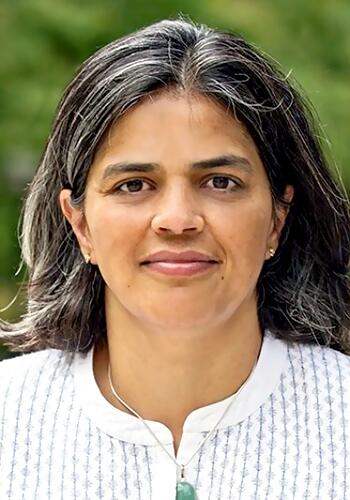
Farina Mir
Associate ProfessorDepartment of History, Michigan University, USA.
Pakistan
- fmir@umich.edu
Details:
| Type: | Article |
| Volume: | 17 |
| Issue: | 1 |
| Language: | Urdu |
| Id: | 6a356077e0465 |
| Published | June 19, 2026 |


This work is licensed under a Creative Commons Attribution-NonCommercial-NoDerivatives 4.0 International License.